Author - Gobinda Pokharel

10 Downing Street’s Legendary Chief Mouser and Seven Prime Ministers of UK

By : Gobinda Prasad Pokharel

Following the resignation of British Prime Minister Keir Starmer, Britain is preparing to choose a new Prime Minister. The seat at 10 Downing Street, the main administrative center of the UK, is getting new leadership. Over the past 15 years, seven people have sat in the Prime Minister’s chair.

Rather than focusing solely on who the next Prime Minister will be, public discussion has centered heavily on a particular employee of the Prime Minister’s Office—one who sits on the steps in front of the building. This employee is not a human, but a white and brown tabby cat. According to the Prime Minister’s Office, this is ‘Larry the Cat. In the uncertain atmosphere of political transitions in Britain, this cat’s position remains entirely secure.

Larry serves in the role of ‘Chief Mouser’ to the Cabinet Office. No matter who comes to 10 Downing Street as Prime Minister, Larry will remain the chief commander of catching mice.

In the United States, items like the pens used by presidents become historic markers. In Britain, this ordinary domestic tabby cat has become a symbol of the state machinery’s soft power.

Larry the Cat. Photo Source: Internet


Larry was brought to the Prime Minister’s Office on February 15, 2011. This domestic shorthair cat was only four years old when he arrived at the office from London’s Battersea Dogs & Cats Home.

Over these years, Larry has closely witnessed the tenures of six British Prime Ministers: David Cameron, Theresa May, Boris Johnson, Liz Truss, Rishi Sunak, and Keir Starmer. Now, he is preparing to welcome his seventh Prime Minister.

Larry needs no introduction. His details are prominently and respectfully displayed on the official website of the British Prime Minister, outlining his core duties. His responsibilities include greeting house guests and inspecting security. Larry also tests antique furniture for its napping suitability. The Prime Minister’s Office respectfully features these daily duties on its website.

In his initial days after arriving at the Prime Minister’s Office, he lacked a strong drive to catch mice. There was significant public chatter accusing Larry of being lazy, and the media even dubbed him ‘Lazy Larry’. Over time, however, he proved his capability. Larry began catching mice, securing his reputation.

The Tradition of Keeping Cats in Britain

In British politics and diplomacy, keeping cats is not merely a personal hobby; it is tied to a long history. In British governance, keeping a cat is linked to centuries-old royal heritage. For this, we must look back to around 1514. When Cardinal Thomas Wolsey was appointed ‘Lord Chancellor’ by King Henry VIII, he brought his cats with him. While managing the affairs of Great Britain, Wolsey entered the court of Henry VIII with a large retinue of cats.

The statue of Cardinal Wolsey in Ipswich, with a cat peeking from behind his robes. Photo: Atlas Obscura.


In the society of that era, public attitudes toward cats were largely negative. Hostile rumors meant cats were frequently viewed as bad omens. Associated with witchcraft and evil spirits, they were often driven from homes—a superstition that persists in various forms today.

However, the reformist Cardinal staged a quiet rebellion against these beliefs. Unmoved by negative public chatter, Wolsey kept his cats by his side during every event. Whether during royal processions or Sunday prayers, he kept his cats close while conducting state affairs, successfully establishing their value. His statue, erected in 2011 at his birthplace in Ipswich, London, honors this connection. The sculpture features a cat peeking out from behind Wolsey’s robes.

The Postal Service Tradition

The written history of officially appointing cats as civil servants with a dedicated government budget dates back to the Industrial Revolution. The documented practice began in May 1869.

At the London Money Order Office of the Royal Post Office, mice were causing severe issues by chewing through important letters and official documents. To solve this, three cats were brought in on a six-month probationary period to hunt the rodents. They were allocated a weekly salary of 1 shilling, which paid for their milk and food.

Following the success of this trial, the cats received a raise in 1873 to 1 shilling and 6 pence per week. Prior to the adoption of the decimal system, the British monetary system relied on pounds, shillings, and pence, where 1 pound equaled 240 pence, and 1 shilling equaled 12 pence.

The policy effectively implemented equal pay for equal work.

According to reports published in various international media outlets, the most famous of these postal cats was ‘Tibs the Great.’ During his 14-year career, he kept the Post Office Headquarters completely rodent-free. He was paid a weekly salary of 2 shillings and 6 pence. When he passed away in 1964, a formal obituary was published to honor him.
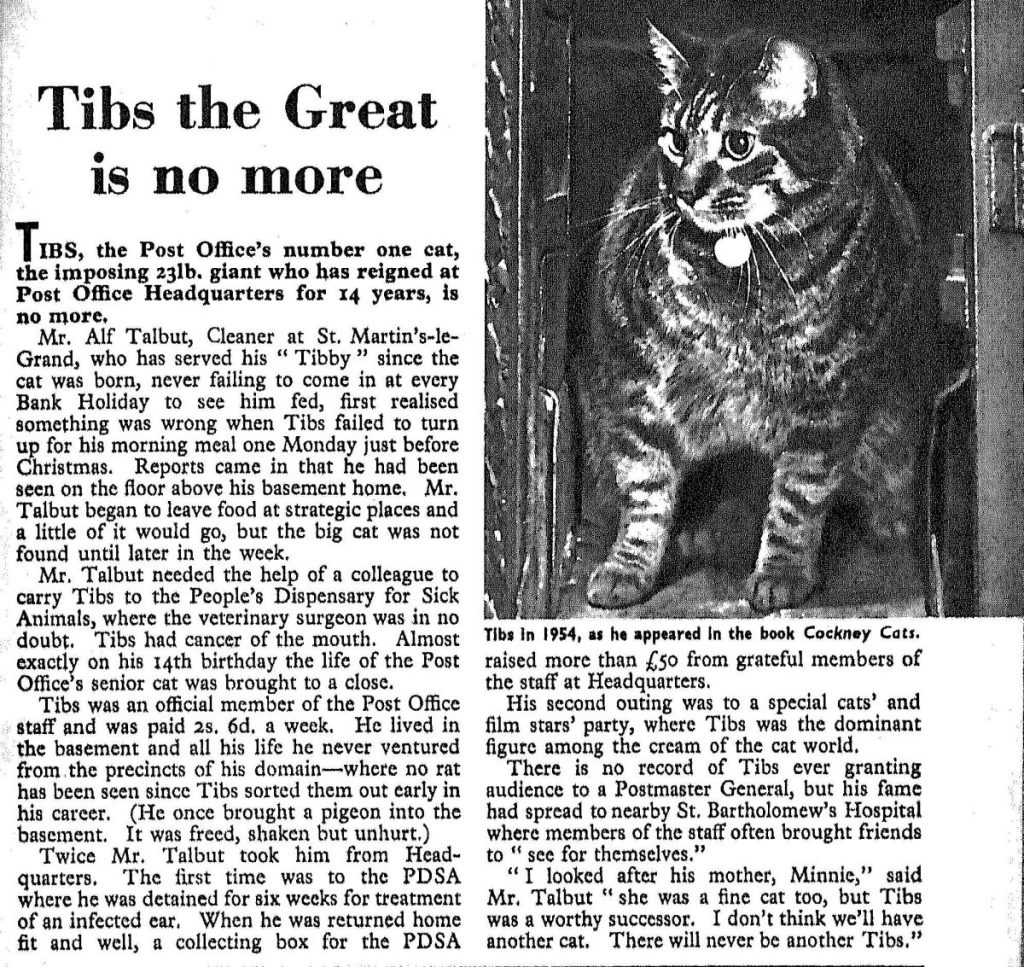
The news of Tibs’ death in the Post Office Magazine, January 1965. Photo: Online.

Following the successful precedent established in 1869, the British government began allocating an official budget for mouse-catching cats at the Prime Minister’s residence (10 Downing Street) in 1929. However, Larry is the first cat to officially hold the formal title of ‘Chief Mouser.’

Similar official assignments exist across other British ministries. The Treasury features a cat named Gladstone as its Chief Mouser, who assumed office in June 2016. His official introduction was slightly delayed due to the ongoing Brexit negotiations at the time. British media noted that within 48 hours of entering the office, Gladstone caught his first mouse, earning widespread praise across the ministry. Today, this cat boasts over 21,000 followers on Instagram. Media reports highlight him not only as an expert hunter but also as an effective public relations asset.

Similarly, the Foreign Office previously appointed Palmerston, a black and white cat, as its Chief Mouser. He was the first cat to officially hold that title in the Foreign Office. His turf wars with Larry at Downing Street generated considerable media coverage—so much so that Palmerston once had to be escorted out under police protection. Britain consistently utilizes these animals as instruments of soft power and diplomatic branding.
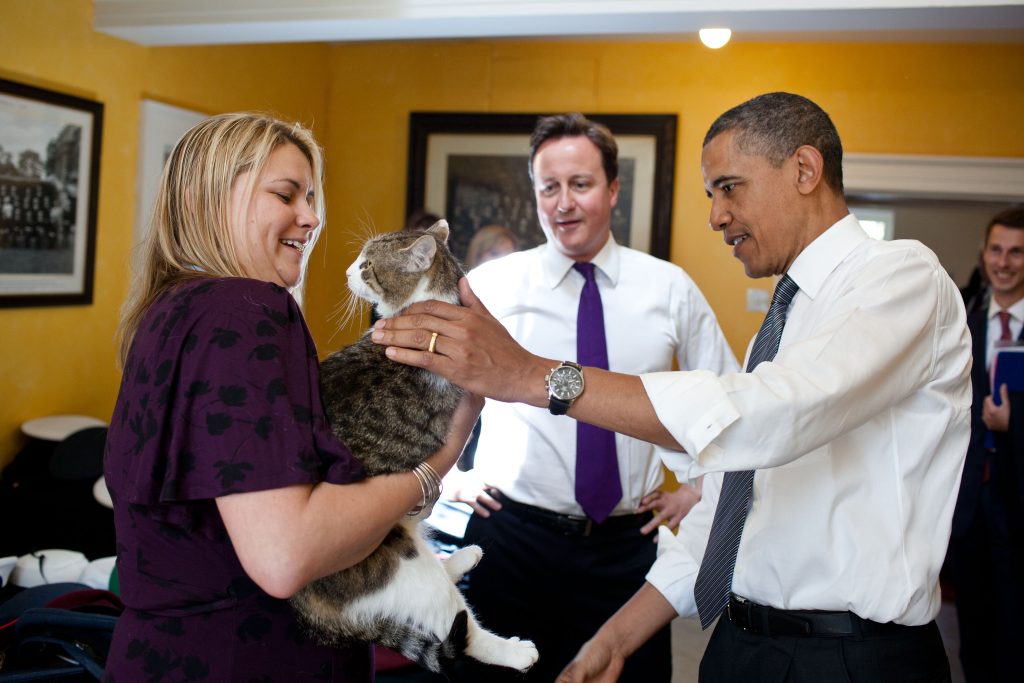
Former US President Barack Obama meeting Chief Mouser Larry at 10 Downing Street in 2011, alongside then-British Prime Minister David Cameron. (Photo: White House)

Whenever images of Larry alongside world leaders like former US Presidents Barack Obama and Donald Trump circulate in international media, they spark broader conversations about British diplomacy.

Interestingly, the expenses for Larry’s upkeep do not come from the state treasury. Instead, his care is entirely funded by voluntary contributions from the staff working at the Prime Minister’s Office.

A Lesson in Institutional Standards

While other nations do not necessarily need to replicate this exact practice, the way Britain treats a domestic animal and highlights it in the public sphere carries massive strategic value. Cultivating similar symbols of soft power within our own domestic institutions could significantly elevate their prestige, character, and public importance.

Preserving fundamental institutional and cultural standards within our political and administrative spheres can yield deeply positive impacts. It introduces an element of “emotional PR” that enriches a nation’s diplomacy and public administration.

In Nepal, the deep reverence shown to animals during various cultural festivals beautifully reflects our state and heritage. Animals such as cows, crows, dogs, oxen, and snakes are revered and worshipped as part of our cultural celebrations. In the diplomatic arena, Nepal has successfully carved out its own unique identity through wildlife diplomacy, presenting one-horned rhinoceroses and elephants as gifts to various nations. Similarly, gifts of Mithila art, intricate wooden sculptures, and symbols of Himalayan identity presented to visiting foreign heads of state serve as our own distinct institutional benchmarks.

The reputation, history, and administrative integrity of any institution must never shift with the changing face of a single ruler or individual. Instead, the system itself must remain resilient. A governance system should be strong enough to transcend the limitations of geography and time. When a state’s institutional frameworks and standards remain firm, their positive impacts endure for generations

My Note: This article was originally published in Nepali Version on Onlinekhabar on 10th Asadh, 2083 BS. Looking past the temporary political cycles of any nation, this piece explores a deeper lesson in governance: how a resilient administrative system maintains its standards, traditions, and institutional prestige regardless of who is in power. Using the unique legacy of Downing Street’s Chief Mouser, it examines the power of systemic stability and what nations like Nepal can learn from emotional public relations and institutional standards.

Article Link: https://www.onlinekhabar.com/2026/06/1961712/larry-the-cat-waiting-for-the-new-prime-minister-in-britain

Archive link:

Madi’s Women are leading green change

Gobinda Prasad Pokharel

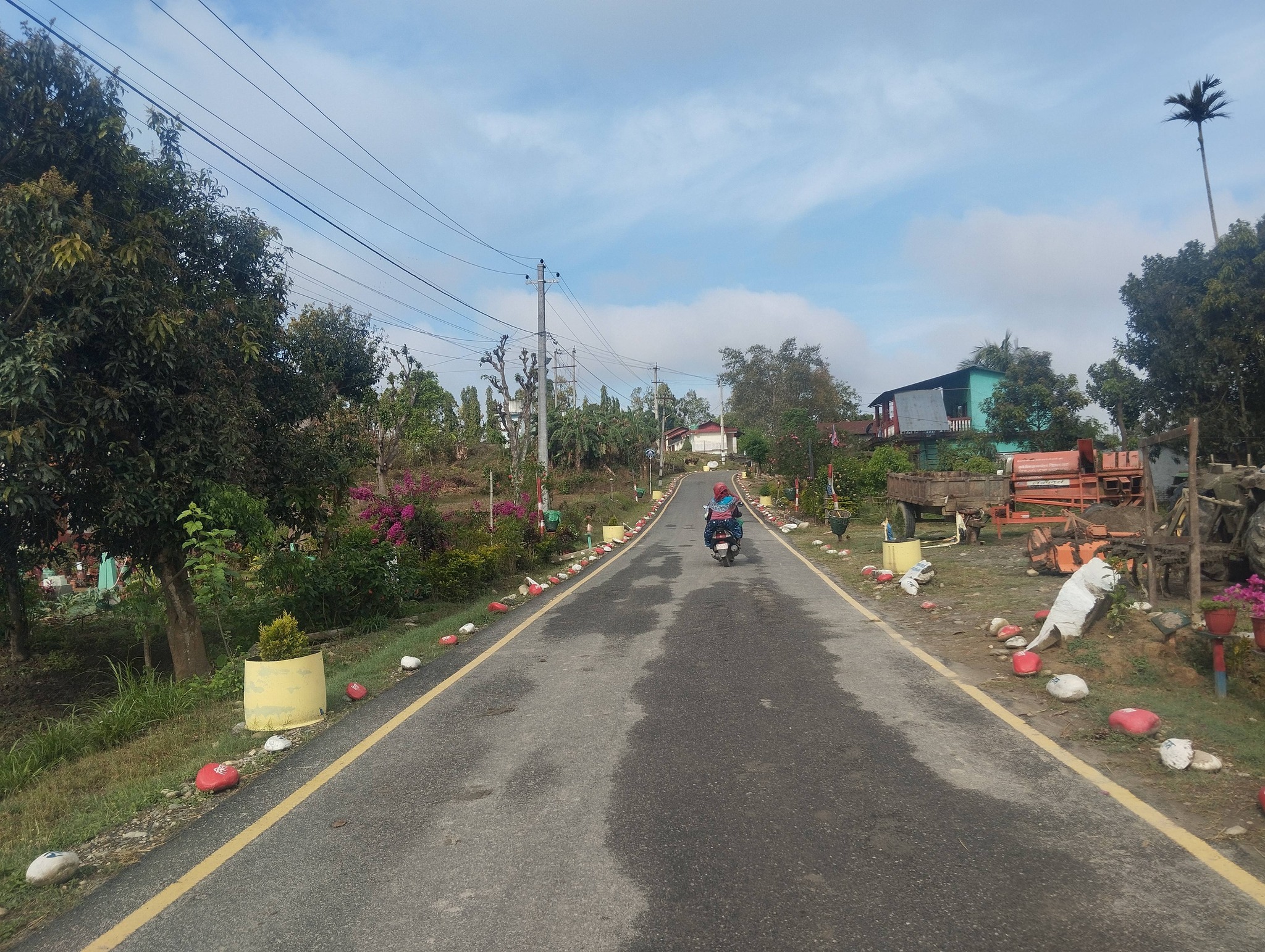
Last week I visited Madi, Chiwan as part of my official work.  I am attracted by a village in Ayodhyamarga in Ward No. 8 of Madi. There is a village called Phulbari Tole in that ward. The village is actually transforming. Unique things are being implemented and practised here.

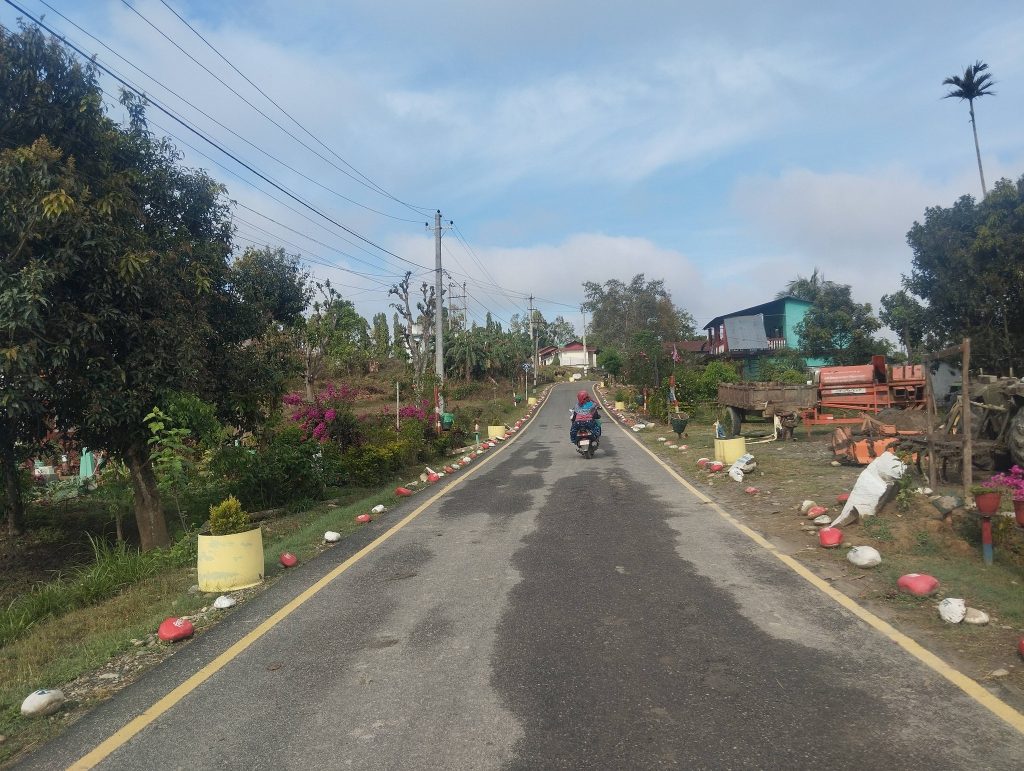
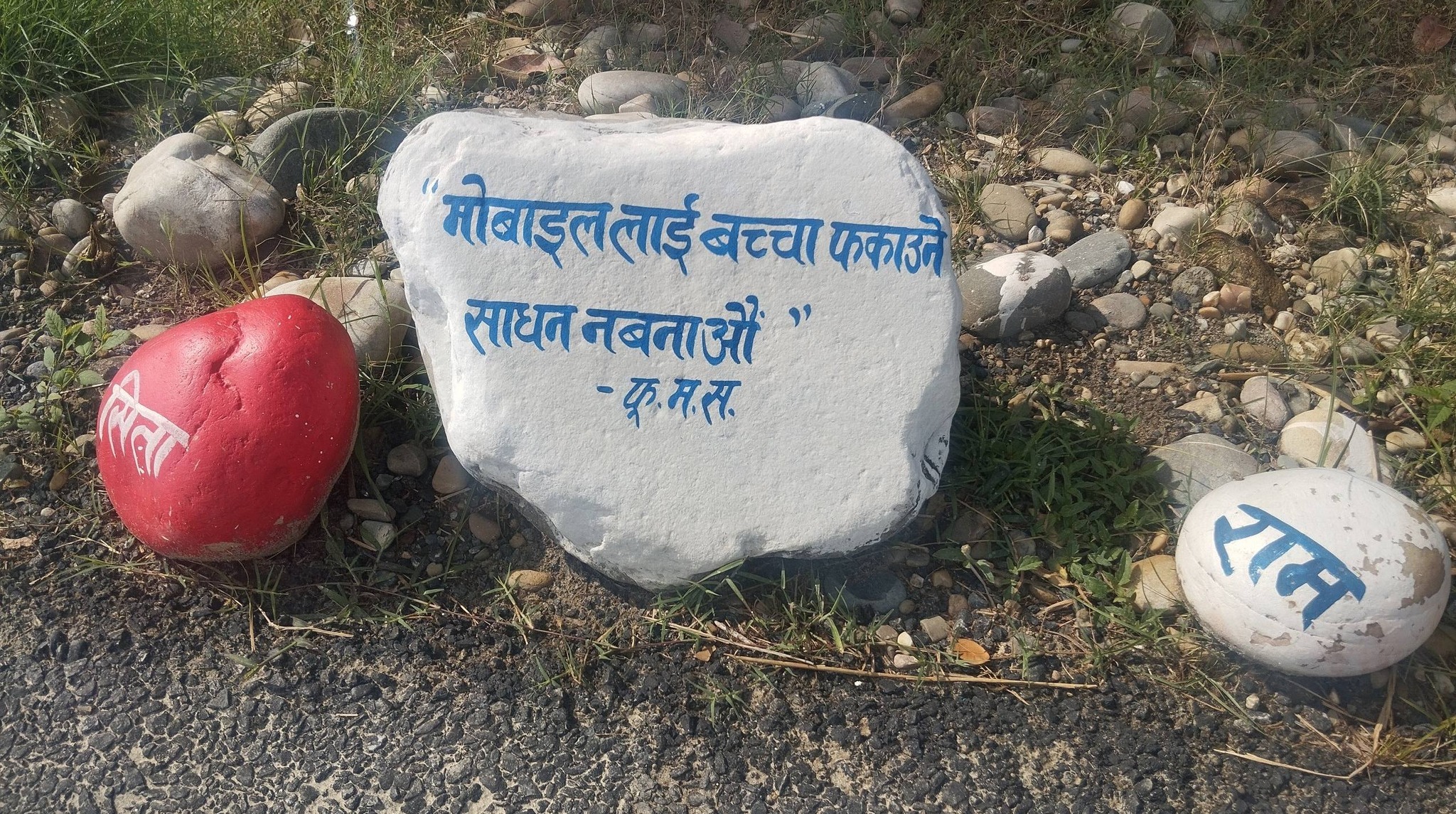
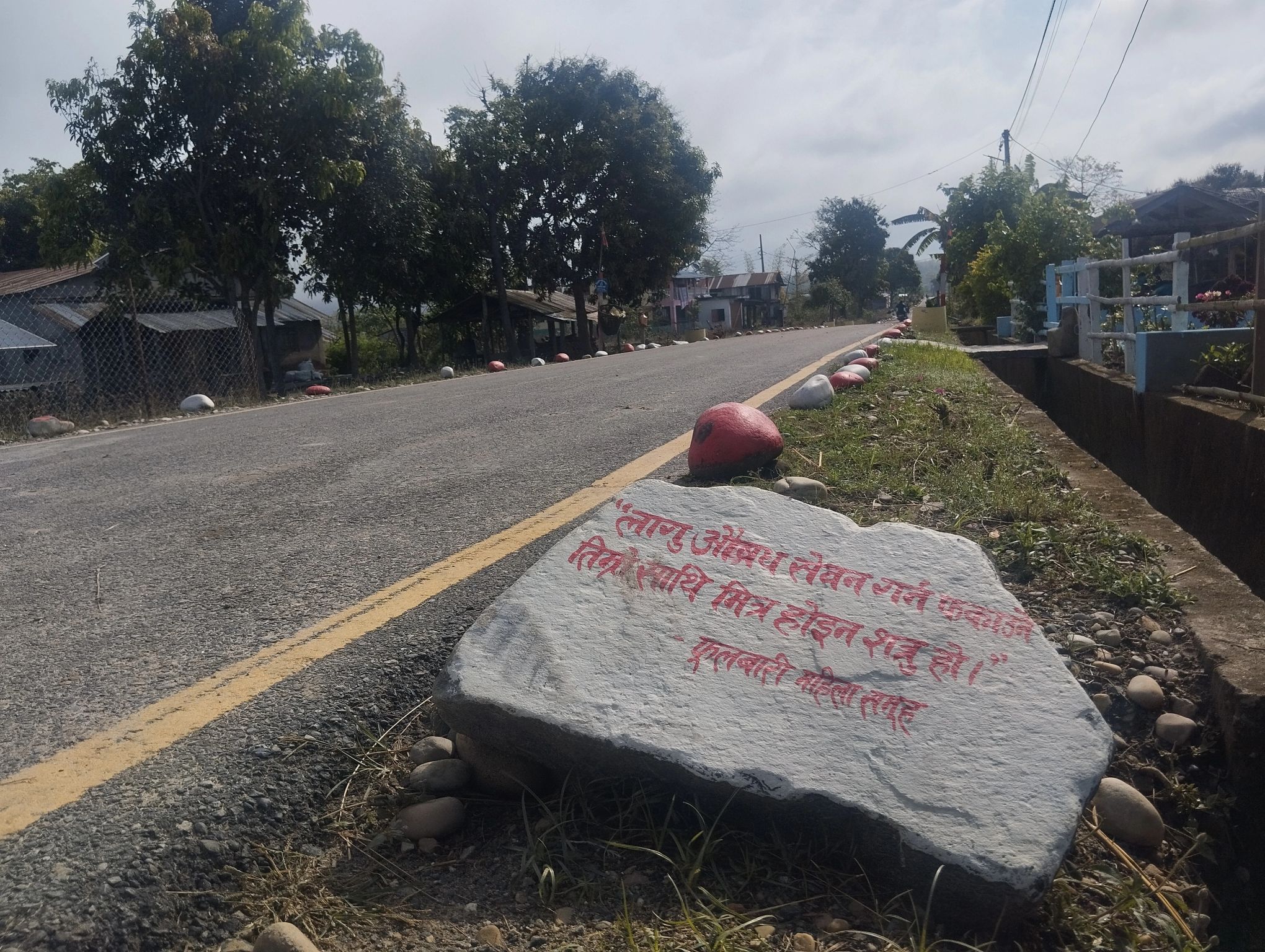
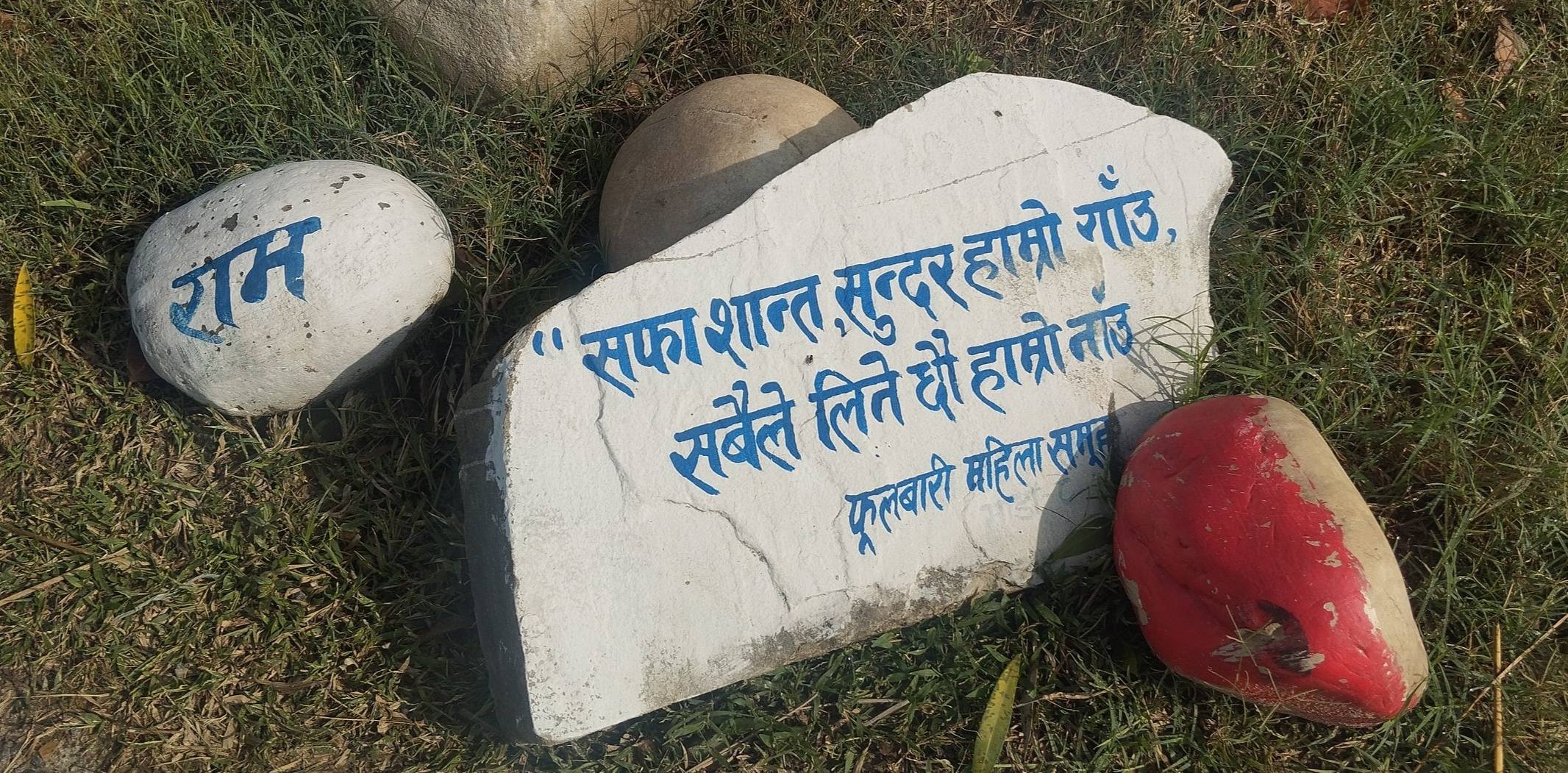
The community there is working tirelessly to transform their place into a model village under the leadership of the Phulbari Mothers’ Group. As you walk through the lanes, you will notice beautifully laid stones inscribed with the names ‘Ram’ and ‘Sita’ and almost every home is greeted by a lush, vibrant garden.

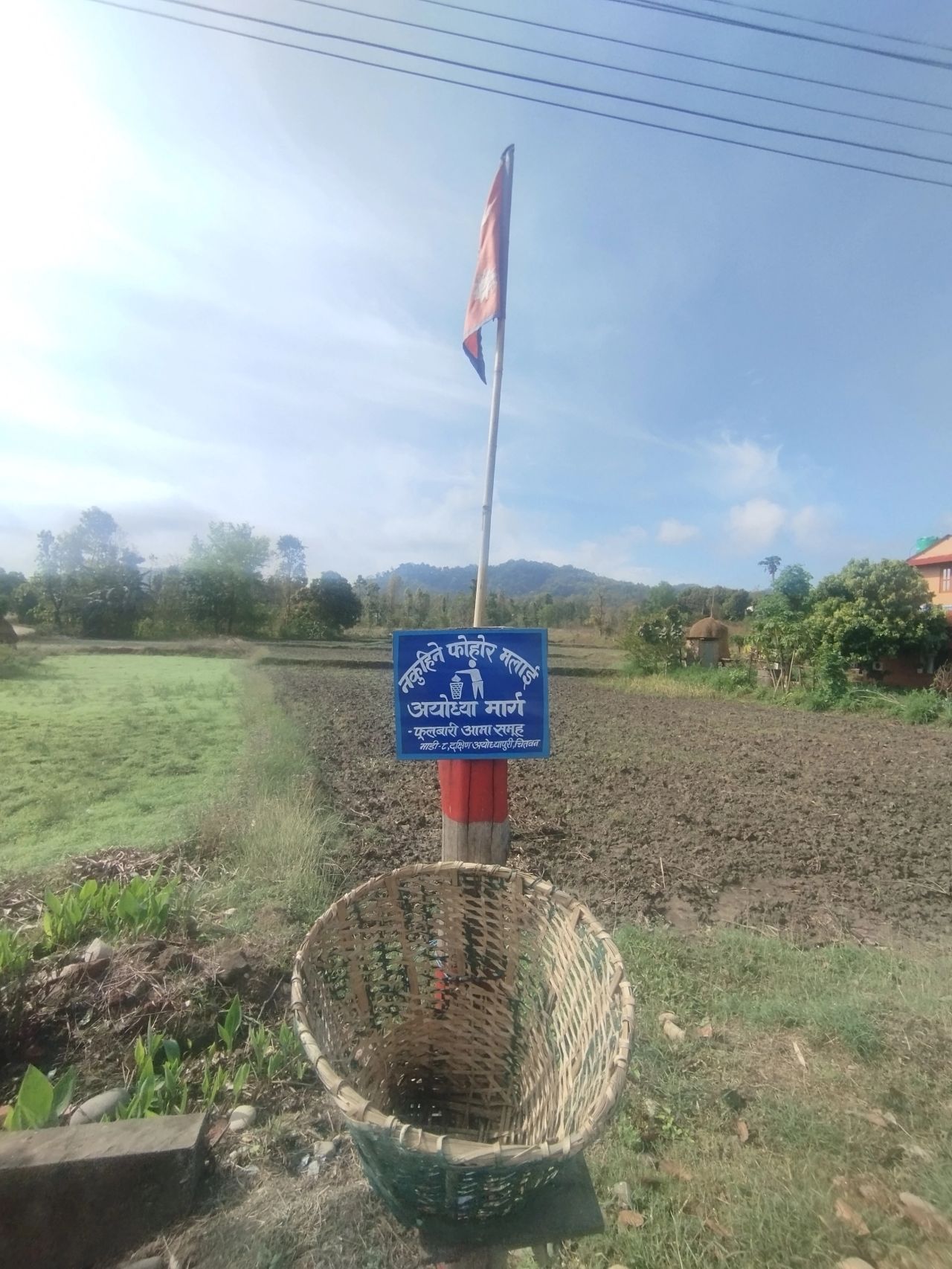
What makes this village truly special is its commitment to environmental by reducing plastic waste. These very stones carry eco-friendly messages.

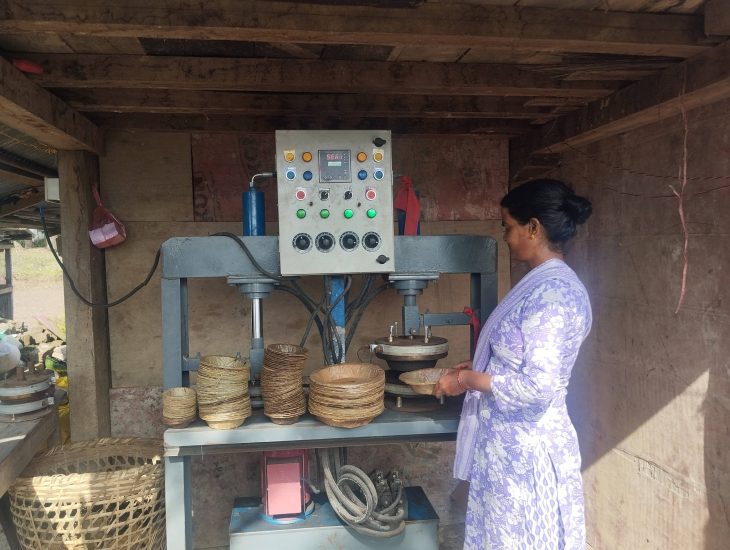
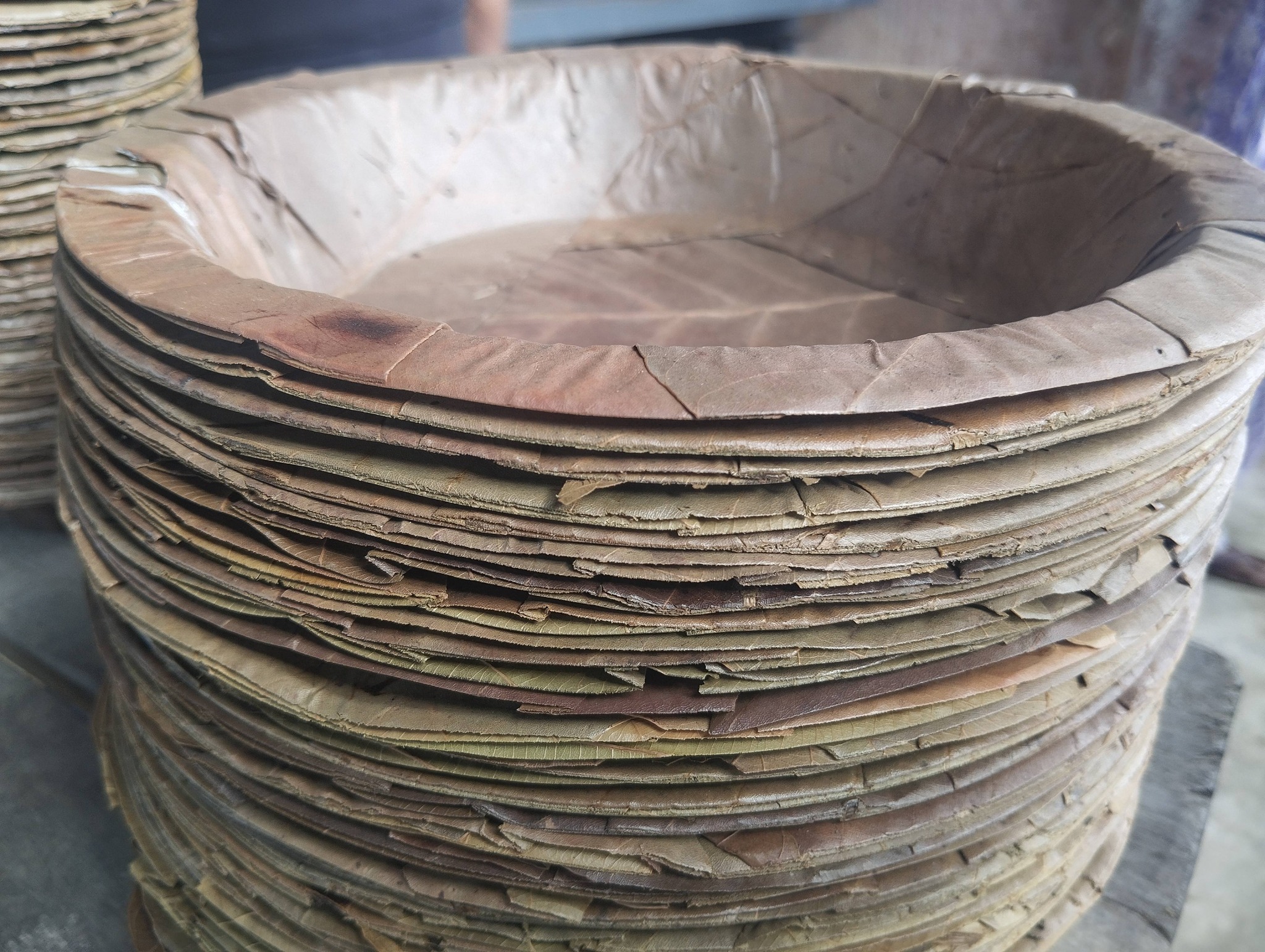
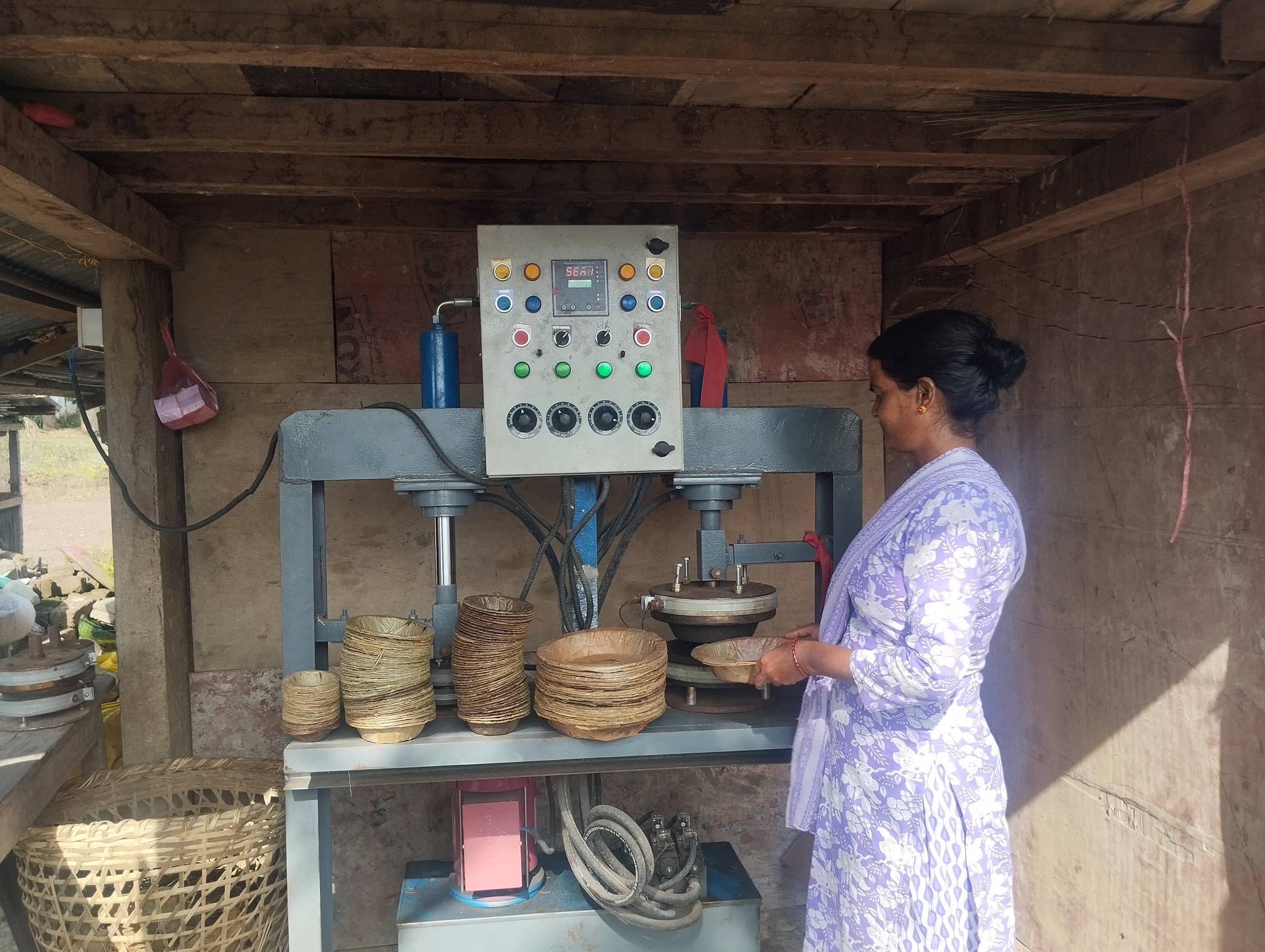
With technical support from the National Trust for Nature Conservation, the community has established a local industry using two specialized machines to produce Duna-Tapari (traditional leaf plates and bowls). This activity is run directly by the Phulbari Mothers’ Group and local residents, aims to completely phase out the use of plastic.

The group consists of 32 women members who collect fallen Sal leaves from the nearby Buffer Zone Community Forest. They dry these leaves and process them through machines to create biodegradable plates. This campaign is an example of how environment protection can go hand-in-hand with economic empowerment, allowing local women to generate an income right from their homes.

The small factory has the capacity to produce over 300 leaf plates a day, which are sold for anywhere between 1 to 5 rupees depending on the size. Unlike plastic, which plagues the environment, these Sal leaf products decompose naturally and pose no threat to nature.

hashtagNTNC hashtagconservation hashtagmadi hashtagLivelihood hashtagplasticfree hashtagenvironment hashtaggobindapokharel hashtagbeatplasticpollution hashtagbufferzone hashtagmadiValley hashtagchitwan

Rising snake bites in Nepal: A cause for concern

Gobinda Prasad Pokharel

On May 16th, two young brothers, 13-year-old Grish Pahadi and 3-year-old Grishma Pahadi, tragically lost their lives due to snake bites in Dudhauli Municipality-1 Kurthauli of Sindhuli. The snake bit Grish on his left finger and Grishma on his left leg while they were sleeping in their cement block house with a tiled roof.

With the beginning of April, the cases of snakebite have started to increase in Terai and central hilly areas of Nepal. Shukraraj Tropical Hospital in Kathmandu has also seen an increase in snakebite patients over the past month. According to the hospital’s director, Dr. Manisha Rawal, the number of patients is gradually increasing from 1-2 per day to 3–4 per day. On Monday alone, three snakebite patients were being treated at the hospital. Dr. Rawal informed me that patients come from districts surrounding Kathmandu such as Kavre, Bhaktapur, Nuwakot, Dhading, and Gorkha.

Snakebite cases in Nepal are most common from April to October, and experts predict that the number will continue to rise with the onset of summer. Snake researcher Kamal Devkota explains that there are many reasons for the increase in snake bites during these months. Snakes come out when the ground heats up during the summer when it rains during monsoon season and water enters in the holes.  Additionally, this is also the time for planting crops, and snakes come out for breeding in April or May.

Most snakebite cases in Nepal occur in the Terai region. A study lead by Professor Dr. Sanjeev Kumar Sharma, rector of the BP Koirala Institute of Health Sciences, found that out of every 100,000 people in Terai, 261 are bitten by snakes each year, and 22 of them die. Snake bites are most common in rural areas and among farmers and poor people. Studies have shown that snake bites are more likely to occur when sleeping outside the house, going to fields or forests, or sleeping on the floor inside the house.

According to Dr. Sharma’s study, approximately 3,000 people die from snake bites each year in Nepal, with an estimated 37,661 cases occurring annually in 23 districts of Terai. The World Health Organization had previously stated that 20,000 cases of snakebite occur in Nepal each year, with 1,000 deaths resulting from them.

There are currently 84 species of snakes in Nepal, with about 21 being poisonous. Among them, Cobra, Karait, Roussell’s Viper, King Cobra, and Coral Snake (Karkat Naag) are the most venomous.

Read more on the originally published article in Ekantipur on 6th June of 2023.

Premonsoon rainfall like winter in Nepal

Gobinda Prasad Pokharel

This year, Nepal experienced a dry winter. Nepal experienced a dry winter from October 24th, 2022, to February 26th, 2023. Researchers have warned of the rise in wildfires and decrease in productivity due to less rainfall in the winter. With the start of the pre-monsoon, we are experiencing rainfall all over the country.

March, April, and May are the pre-monsoon months in Nepal. At this time, local winds are more active, resulting in precipitation, thunderstorms, and lightning in the evening and afternoon for several hours. The intensity of rainfall is high during the premonsoon, which lasts for only a few hours. If it rains in Bhaktapur, it may or maynot rain in Kathmandu during the premonsoon within a small distance. So, the rainfall is not uniform across the country during the premonsoon.

In the past few days, there has been low and moderate rainfall across the country. The rain has positive impacts for the farmers. The characteristics of the recent rainfall did not match those of the pre-monsoon. It feels like winter rainfall with low and moderate rainfall and cold temperatures.

he total 248 rainfall measurement stations, 113 recorded rainfall. Similarly, on March 19th, 177 stations recorded rainfall, 210 on the 20th March and on September 22, 71 stations recorded rainfall. A maximum of 93.5mm of precipitation was recorded in those stations. Nepal’s average premonsoon precipitation record data (1991–2020) is 226.2mm.

This year’s El Nino has affected the winter rainfall in Nepal. After El Nino ended, Nepal experienced westerlies during the premonsoon. That’s why were are experiencing cold in this march due to this effect and character of rainfall.

More in My News Published in the ekantipur of 23rd March. The print version of this story is published on the 24th of March of 2023 at Page 11 in Kantipur Daily.


Naming of captive elephant in Nepal

Gobinda Prasad Pokharel

A captive elephant inside an Elephant Breeding and Training Center in Chitwan, Nepal, gave birth to a calf after 3 hours of cesarean. This is the first time, in the case of Nepal, that a captive pachyderm gave birth after a c-section.

The calf was given a name, BijayaGaj, in honor of the veterinary doctor who led the surgery on the pachyderm. The birth of an elephant after a c-section is considered rare when the health conditions of the mother and calf are normal. Past cases show the deaths of the mother and calf after a c-section for these mega herbivores. However, the calf and the mother are taken care of with full consideration because of the conservationists’ fear that the calf might get infected by the disease.

The captive calf of this Asian elephant has a high probability of transmission of diseases like elephant endotheliotropic herpesviruses, which can cause hemorrhagic disease and lead to death. On the other hand, there are high chances of disease transmission in the mother’s wound, where the outer part of the skin is still open.

The doctor stitched the inner part of the skin of the wound. The wound is about one foot (30.48 cm) after the surgery. On the other hand, the mother did not identify her calf. It is not considering its child and did not allow it to come nearby. The male calf is given skimmed milk with a ratio of 1:12 liters of water. Conservationists fear the adoption of the calf by its mother. They doubt that this may be due to a cesarean.

In Nepal, the name of the calf born inside the breeding center was given by the members of the royal family. Following the abolition of the monarchy and implementation of the new federal system in Nepal, the naming of calves in honor of a place, a special day, a conservationist, and so on, has started.

Previously, the calf was given the titles of king, queen, prince, and princess, along with the other members of the royal family, by the Royal Palace. These days, the name is given by the Chief Conservation Officer of the National Park in a ritual ceremony. A special ritual is followed in naming the calf on the 12 days following its birth. During the naming ceremony of the calf, guests are invited to see the function and are offered food inside the breeding center.

I wrote this in Ekantipur and Kantipur Daily both on 19th March of 2023 in the given heading :
गणतन्त्रले बदलेको हात्तीको नामकरण

Lesser Adjutant Storks are Declining in Nepal

Lesser Adjutant Storks of Nepal are declining due to haphazard Land Plotting, Unplanned Urbanization, cutting down of tree species, habitat destruction, etc.
This story is based on a Field Visit to Urlabari Municipality of Province 1 of Nepal. A previous study showed that there used to be 15 colonies but now there are only colonies left in my visit.
I cross-checked the identification done by Dr. Hem bahadur Katwal, he also verify that the current colony number is 2 in this region.
I write the status of these species in Urlabari and acrosss  the country based on previous research studies and recent papers on this farmland bird.
My news report on this species is published in Kantipur Online on 30th October 2022.

कछुवाको अध्ययन न संरक्षण

लामो समययता नेपालमा फेरि देखिएनन् बाटागुर, बाटागुर ढोंगोका र चित्रा इन्डिका प्रजाति

वातावरण विज्ञानकी विद्यार्थी अस्मिता श्रेष्ठले सन् २०२० को मार्चमा सप्तरीमा धर्के भनिने भारतीय धुरी कछुवा फेला पारिन् । ती कछुवा कोसी ब्यारेजभन्दा २ सय मिटर पश्चिम नजिकैको एक पोखरीमा भेटिएको थियो । वातावरण विज्ञानकी शोधार्थी श्रेष्ठले भेट्नुअघि कछुवाको उक्त प्रजाति सप्तरीमा पाइएको स्थानमा रेकर्ड थिएन ।

झापास्थित कछुवा अध्ययन तथा प्रजनन् केन्द्रमा रहेको इलंगेटेट इन्डोस्टुडो टर्टोइस (लाम्चे कछुवा, ठोटरी) कछुवा । तस्बिर सौजन्य : आरको नेपाल ।

प्राध्यापक एवं हर्पिटोलोजिस्ट करन शाहद्वारा लिखित ‘हर्पिटो फाउना अफ नेपाल’ किताबमा यो कछुवा सुनसरी जिल्लामा पाइने उल्लेख भए पनि उक्त ठाउँ विशेषका लागि तस्बिरसहितको प्रमाण भने थिएन ।

आईयूसीएन रेड लिस्टले यो कछुवालाई असुरक्षित प्रजाति (भल्नर्रेबल स्पीसीस) श्रेणीमा राखेको छ । कछुवा भेटिएको बारे यसै महिना जर्नल अफ थ्रिटेन्ड ट्याक्सामा श्रेष्ठको यो अनुसन्धान प्रकाशित भएको छ ।

०००

सन् २०२० मा लुम्बिनीमा पनि इन्डियन आइड टर्टल (मोरेनिया पेटर्सी) प्रजातिको कछुवा भेटियो । त्यहाँ यो लामो समयपछि देखिएको थियो । साउथ एसिएन रेप्टाइल नेटवर्कमा यसबारे मे २१ मा आलेख प्रकाशित छ ।

उक्त कछुवा हरैया खोला नजिकै भेटिएको थियो । यो प्रजातिको अनुसन्धान निकै कम भएको उक्त आलेखमा उल्लेख छ । कछुवामा विद्यावारिधि गरिरहेका झापाका टपिलप्रकाश राईको मुख्य लेखकीय भूमिकामा प्रकाशित उक्त आलेखअनुसार यो कछुवा नदी क्षेत्र छेउछाउ बन्ने पोखरी तथा नदीले बहावको दिशा बदल्दा बनेका तालहरूमा पाइन्छ । यो तराई क्षेत्रको खोला पनि पाइने गरेको पछिल्ला अध्ययनहरूले देखाएका छन् । यसअघि अनुसन्धानकर्ता प्रकाशचन्द्र अर्याल लगायतको टोलीले सन् २००९ मा गरेको अनुसन्धानका क्रममा रूपन्देहीको गैंडाताल (नेपालमा प्रजातिको पहिलो रेकर्ड भएको स्थान) तथा आसपासका क्षेत्रमा यो प्रजातिको कछुवा भेटिएको थिएन ।

आईयूसीएनले कछुवाको यो प्रजातिलाई पनि असुरक्षित अवस्थामा रहेकाको सूचीमा राखेको छ । साइटिस अभिसन्धिअन्तर्गत यो अनुसूची २ मा सूचीकृत छ । पश्चिम नेपालका तराई क्षेत्रहरूमा अझै पनि यो प्रजातिका कछुवाहरू रहेको उक्त आलेखले देखाएको छ ।

०००

नेपालमा पाइने कछुवाहरूमध्ये लाम्चे पनि भनिने ठोटरी (इलंगेटेट इन्डोस्टुडो टर्टोइस) अति संकटापन्नमा सूचीकृत कछुवा हो । यो साइटिस अभिसन्धिको अनुसूची २ मा सूचीकृत छ । यसबारे अनुसन्धान गरिरहेका वातावरण अध्ययन तथा संरक्षण केन्द्र (इन्प्रोक्स) का अनुसन्धानकर्ता परमानन्द राजवंशी तराईदेखि चुरे क्षेत्रसम्म कछुवा पाइए पनि यसको संरक्षण स्थानीयस्तरबाटै गरिनुपर्ने बताउँछन् । सालको जंगलमा पाइने यो कछुवालाई कतिपयले पहेंलो कछुवा भनी भन्छन् ।

यसको संरक्षणमा चुनौती देखिएको उनी बताउँछन् । ‘ठोटरी विरलै भेटिन्छन्, भेटिहाले मानिसहरूले पकाएर खाइदिन्छन्,’ उनले भने, ‘प्राय: आदिवासी रैथाने समुदायहरूले कछुवालाई रोग निको पार्ने, धेरै पोषणयुक्त हुने भन्दै खाने गर्छन् । त्यसैले यो जोगाउन पनि स्थानीयस्तरबाटै थालिनु गर्नुपर्छ ।’ यो प्रजातिको कछुवा लजालु स्वभाव हुने र वन क्षेत्रमा लुकेर बस्ने उनले बताए ।


रूपन्देही र पाल्पा जिल्लामा कछुवा खोजी गर्दा उनले १३ वटा ठोटरी प्राकृतिक वासस्थानमा फेला पारेका थिए । उनले दुई वर्षअघि ती जिल्लामा ३ प्रजातिका १९ वटा कछुवा फेला परेको उनले बताए ।

०००

शोधार्थीहरूका अनुसार नेपालमा १६ प्रजातिका कछुवा पाइएको रेकर्ड छ । तीमध्ये ५ वटा साइटिस अभिसन्धिको अनुसूची १ र बाँकी ११ वटा अनुसूची २ मा सूचीकृत छन् । तीमध्ये ठोटरी र तीन धर्के कछुवा (ट्राइक्यारिनेटा) जमिनमा पाइन्छन् । ‘हामीकहाँ १६ प्रजाति पाइने भनिए पनि बाटागुर, बाटागुर ढोंगोका र चित्रा इन्डिका लामो समयदेखि फेरि कतै पाइएको प्रकाशमा आएको छैन,’ कछुवा अनुसन्धानकर्ता प्रकाशचन्द्र अर्यालले भने, ‘किताब र लेखहरूमा पाइने भने पनि विभिन्न सर्भे तथा अनुसन्धानहरूमा अझै रेकर्ड गर्न सकिएको छैन । यी सबै प्रजातिहरू संकटग्रस्त हुन् । ’

आईयूसीएनको कछुवा विशेषज्ञ समूहका संयोजक प्रा.डा. क्रेक स्टान्डफर्ड भन्छन्, ‘बाटागुर कछुवा धेरै नै जोखिमको सूचीमा छन् । यिनको संख्या पक्कै पनि घटेको छ । नेपालमा पनि यसको बृहत् सर्भे गर्नुपर्ने देखिन्छ ।’

०००

प्राकृतिक वातावरणमा पाइने जीवका सबै प्रजातिको आआफ्नै महत्त्व छ । त्यस्तै कछुवा पनि सिमसारको कुचीकारमध्येमा पर्छ । कछुवाका प्रजातिको अध्ययन, अनुसन्धान नेपाल सरकारको प्राथमिकतामा परेको छैन । ठूला जीवहरूको संरक्षण गर्दा साना जीवहरू आफैं संरक्षण हुने राज्यको मान्यताका कारण नेपालमा साना प्रजातिका जीवबारे संक्षणका योजना नीति निर्माताको चासोमा परेको देखिँदैन । धेरै ठाउँमा कछुवाहरू भेटे मारेर खाइहाल्ने प्रवृत्तिका कारण पनि यसको संरक्षणमा चुनौती थपिएको इन्प्रोक्सका अनुसन्धानकर्तासमेत रहेका पद्मकन्या कलेजका वातावरण उपप्राध्यापक अर्याल बताउँछन् ।

कछुवाको अध्ययन तथा संरक्षणमा नयाँ पुस्तालाई प्रेरित गर्न जेठ ९ गते वातावरण संरक्षण तथा अध्ययन केन्द्रले गोष्ठी गरेको थियो । त्यसमा सहभागी राष्ट्रिय तथा अन्तर्राष्ट्रिय क्षेत्रमा कछुवाका लागि काम गरिरहेकाहरूले आफ्नो अनुसन्धानको नतिजा प्रस्तुत गरेका थिए । नेपाली अनुसन्धानकर्ताले कछुवाका बारेमा युवा पुस्ताको धारणा, घोडाघोडीको वरपरका कछुवाको अवस्था, मिनी चिडियाखानाका रूपमा स्थापित केन्द्रहरूमा कछुवाको अवस्थिति तथा संरक्षणका लागि कानुनी प्रावधानका विषयमा प्रस्तुतिहरू दिएका थिए ।

वातावरण विज्ञानकी विद्यार्थी अंकिता तिमिल्सेनाले रामसारस्थलको रूपमा सूचीकृत कैलालीको घोडाघोडी ताल क्षेत्रमा अहिले पनि कछुवाको संकलन गर्ने तथा खानाको रूपमा उपयोग गर्ने प्रवृत्ति भएकाले संरक्षणमा चुनौती रहेको बताइन् ।

गोष्ठीमा नेपालभर रहेका १७ वटा मिनी चिडियाखनामध्ये ११ वटामा कछुवा राखिएको पाइएको नारायण निरौलाले बताए । ‘चिडियाखानाहरूमा १ सय ५३ वटा कछुवाहरू रहेको पाइएको छ,’ उनले भने । चिडियाखनाले कछुवा संकलन कहाँबाट गर्छन्, व्यवस्थापन कसरी भइरहेको छ भन्ने बारेमा अनुसन्धान हुनुपर्ने भनाइ राखे । वन तथा वातावरण मन्त्रालयका उपसचिव हरिप्रसाद पाण्डे कछुवा संरक्षणमा सरकारले नीतिगत कामहरू गरेको भए पनि त्यो प्रयासलाई थप परिस्कृत गर्न पर्ने देखिएको बताउँछन् । हालसम्म २९ प्रजाति पाइएको भारतमा एउटा संस्थाले कछुवाका दुर्लभ प्रजाति पहिचान र संरक्षणका लागि मोबाइल एप नै बनाएको छ । कछुवा देख्नेहरूले फोटो र जानकारी राख्दा त्यसबाट संरक्षणमा मद्दत पुगेको छ ।


Published in Ekantipur on 2nd June of 2021


प्रकाश प्रदूषण

गोविन्द पोखरेल

हामी सबैको उठ्ने र सुत्ने समय हुन्छ । हामीमा सुत्ने र उठ्नेको रिदम(लय) ‘बायोलोजिकल क्लक’ले मिलाउँछ । यही बायोलोजिकल क्लक प्रकाशको वरीपरी घुमेको हुन्छ । यसको चक्र बिँग्रदा हाम्रो सुत्ने उठ्नेको चक्र प्रभावित हुन्छ । यो चक्रलाई प्रकाशले प्रभाव पार्छ Read More

दुईवटा टाउको भएको सर्प


गोविन्द पोखरेल

नवलपुर कावासोती नगरपालिकामा दुईवटा टाउको भएको करेत सर्प भेटिएको विषयलाई सरिसृप र उभयचर क्षेत्रमा कार्यरत अनुसन्धानकर्ता र विद्यार्थीहरुले चासोका साथ लिएका छन् । रुपन्देहीका सर्प अनुसन्धानकर्ता कमल देवकोटा र उनको समूहले यस सम्बन्धि थप अध्ययन र विश्लेषण गरेर रेप्टिाइल्स एन्ड एम्बिया जर्नलमा प्रस्तुत गरेको सामग्री यसै साता प्रकाशित भएपछि यो विषय बाहिरिएको हो Read More