
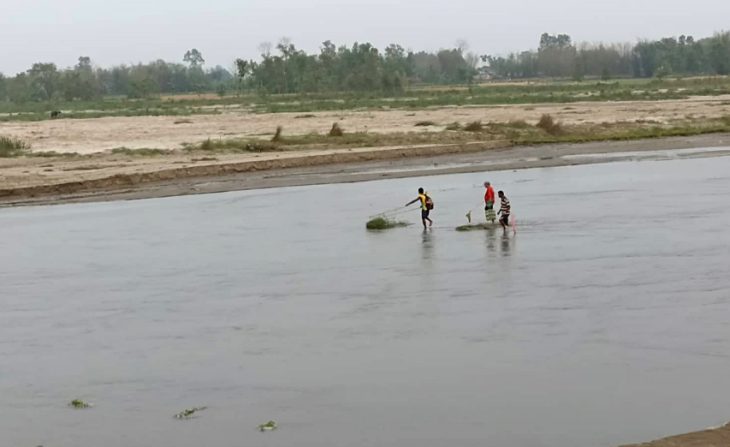
I recently read Prabesh Khatiwada’s long feature story on Onlinekhabar titled ‘बाम माछाको रहस्यमय जीवन : नदीका पाहुना, समुद्रका सन्तान’ (The Mysterious Life of the Eel Fish: Guest of the River, Children of the Sea). The title immediately stirred vivid memories of my childhood. Well and nicely articulated by Mr. Prabesh Khatiwada ji. Reading this story felt like reading a deeply resonant piece written by Setopati’s Sudeep Shrestha.
This article gave me a wave of nostalgia that swept over my hometown. I had never previously gone deep into the biology of this fish. From his article, I came to know that this creature is born in the deep saltwaters of the Indian Ocean, traveling thousands of kilometers upstream into inland rivers, only to return back to the ocean decades later to spawn and die.
Reading it brought me straight back to the late 1990s and early 2000s in my home village of Urlabari, Morang.
Back then, I knew nothing about the Atlantic or the Bay of Bengal, nor did I realize that the mysterious, slender fish swimming in our local streams were oceanic travelers. To us kids, the muddy banks of Solti Khola and the surrounding wetlands were simply our playground.
मोरङको बेलबारी नगरपालिकास्थित बजारमा बिक्रीका लागि राखिएको बाममाछा । हेर्दा सर्प जस्तो देखिने बाममाछा यहाँ प्रति किलो रू एक हजारमा खरिदबिक्री हुने गरेको छ । तस्बिर : मणिराम दाहाल/ रासस
Chasing Kaichi Baam with a Balchi
During the monsoon, the landscape around Urlabari transformed. Swampy peatlands flooded, and the river system connecting Solti Khola to the Bakraha River came alive. Equipped with a simple Balchi—a curved hook baited with earthworms and tied to a string and rod—my friends, my brother, and I would head out for swimming and fishing.
Navigating those marshlands wasn’t without its thrills and fears. We treaded carefully, always terrified of encountering the Vyatlung. Vyatlung used to be a mysterious, leech-like swamp creature that lurked in the mud. But the ultimate reward was catching a Kaichi Baam—the slender, scissor-like variant of the eel that hid deep inside underwater burrows. On other days, we would also come across the Andha Baam embedded in the marsh.
“Navigating those marshlands was not without its thrills and fears. We treaded carefully, always terrified of encountering the Vyatlung lurking deep in the mud.”
Whenever I slipped home covered in mud, my mother would scold me for wandering off to the river. What she saw as a dangerous childhood habit was, for us, an irreplaceable thrill. Finding a small Baam in the flowing river was rare, which made every catch in those muddy rivulets feel like uncovering a hidden treasure.
A Symphony of Soil, Simsaag, and Eels
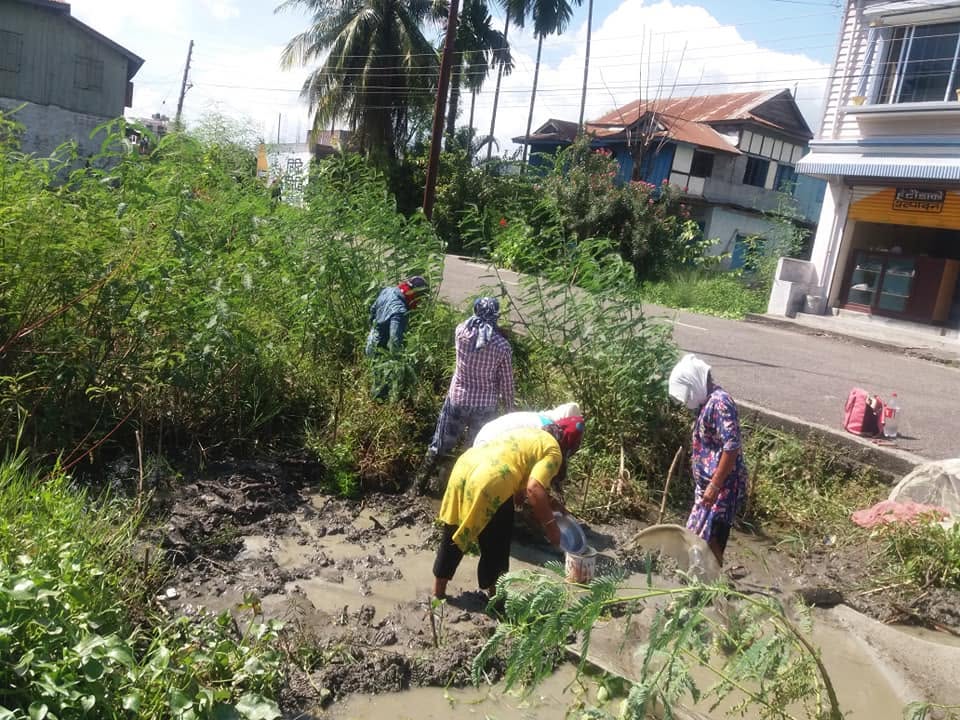
Looking back, those floodplains were the economic and ecological lifeblood of our village. Monsoon floods brought down rich topsoil from upstream, forming fertile floodplains and small rivulets along the riverbanks. In the fertile topsoil of those small rivulets, local farmers cultivated Simsaag (watercress). These Simsaag beds provided an alternative source of income for their families.
That soft, nutrient-rich mud under the Simsaag beds became the ideal sanctuary and home for young Baam Machha to feed, hide, and grow.
“It was a perfect ecological loop: the river brought the fertile soil, Simsaag was grown in that floodplain, and the muddy rivulets sheltered the oceanic guests.”
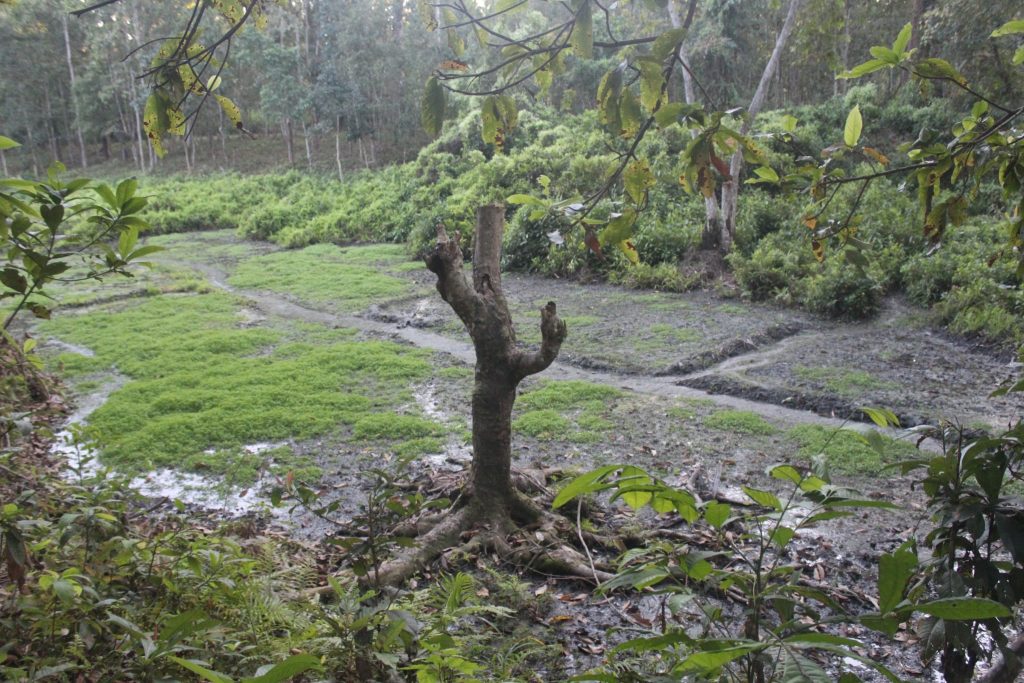
A view of a wetland area in Urlabari with muddy banks, natural vegetation, cultivated Simsaag beds. I took this photo during my graduate field study.
What Was Once a Haven Is Now Under Threat
As Khatiwada’s article reminds us, the Baam Machha is a guest in our rivers. But over the years, we have made our rivers hostile hosts.
Even during my childhood, destructive practices were beginning to creep in. I remember seeing people place chemicals and poisons near bridges and embankments to catch fish easily. In the decades since, wetland drainage, riverbed degradation, and water pollution have broken the natural connectivity between our local streams like Solti Khola and the larger ocean systems beyond.
When we destroy a swampy rivulet in my village, we lose much more than a local fishing spot. We are severing a link in a grand, global migration that has existed for millions of years. The wetlands and marshy lands where we used to fish are now filled with concrete houses.
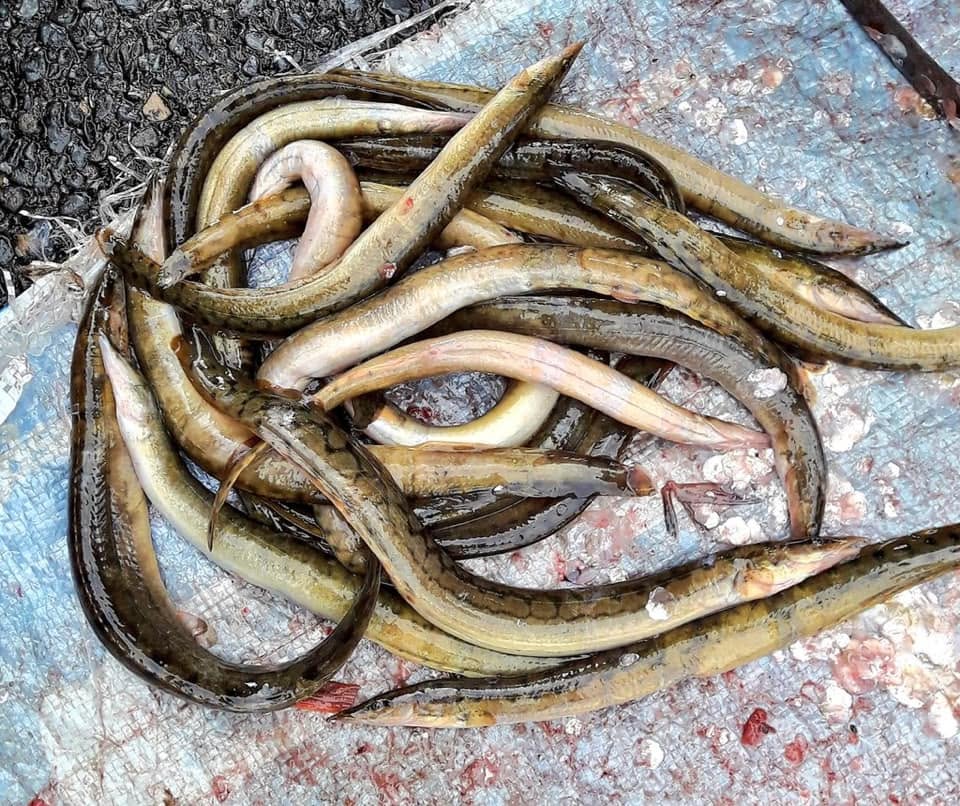
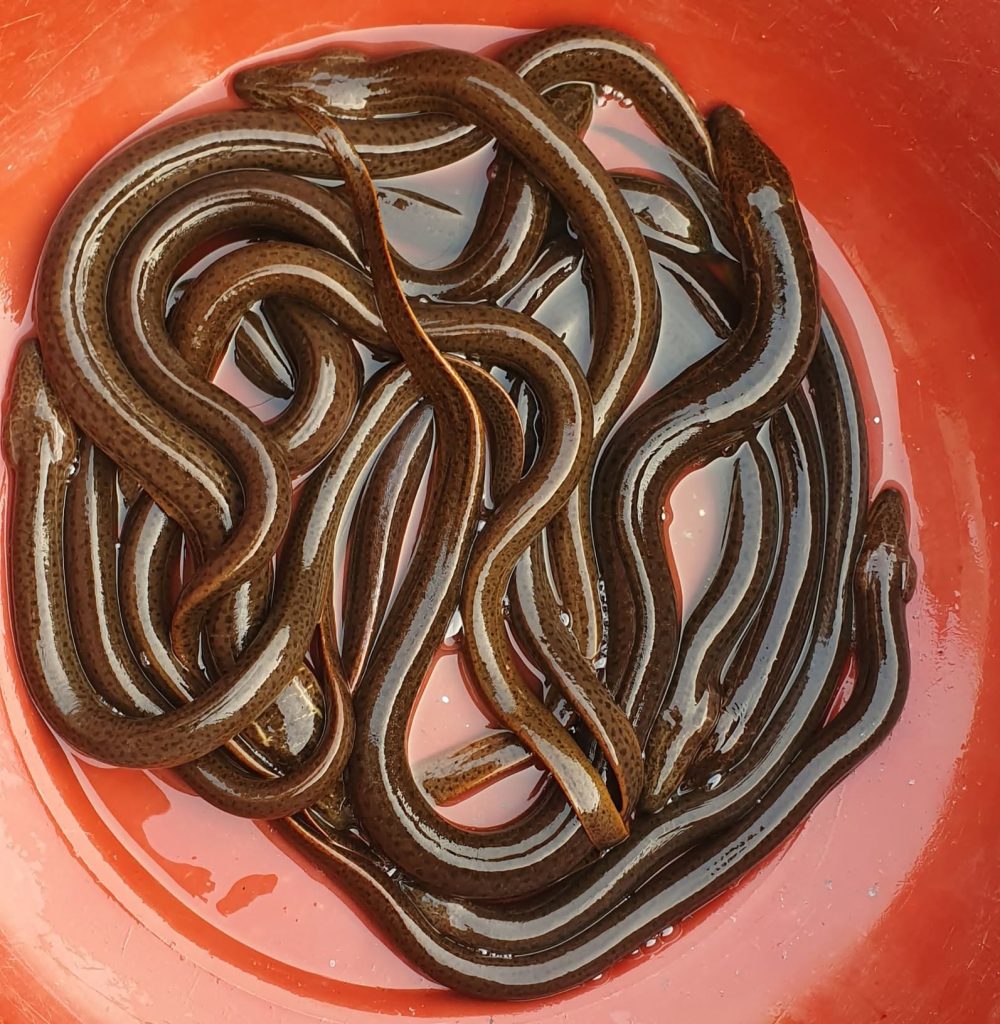
An eel caught in local riverwaters, showing the Kaichi Baam.
Reclaiming the Memory, Protecting the Future
Reading about the biology of the Baam fish has transformed my childhood memories. This story turned my simple nostalgia into a deep appreciation for ecological connectedness. The tiny Kaichi Baam and Andha Baam I pulled from the mud near Solti Khola had navigated an extraordinary, heroic journey across oceans and river networks just to reach our village.
Our local wetlands in the Tarai are precious. If we want future generations in places like Urlabari to experience the wonder of these river guests, we must protect our peatlands, stop destructive fishing practices, and keep our rivers free-flowing.
The next time you see a Baam fish, remember: it carries the mystery of the deep sea right to our backyard.